
The Accidental Operating System
For years, people criticised Holacracy as too rigid — obsessed with explicitly defined roles, constitutional governance, distributed authority, and transparent accountability. Too much structure for messy, human organisations.
But it turns out that wasn't a bug. It was a feature.
AI agents don't thrive in traditional hierarchies. They need clear boundaries, which explicit roles provide. They need decision protocols, which constitutional governance provides. They need autonomy, which distributed authority provides. They need accountability, which transparent ownership provides.
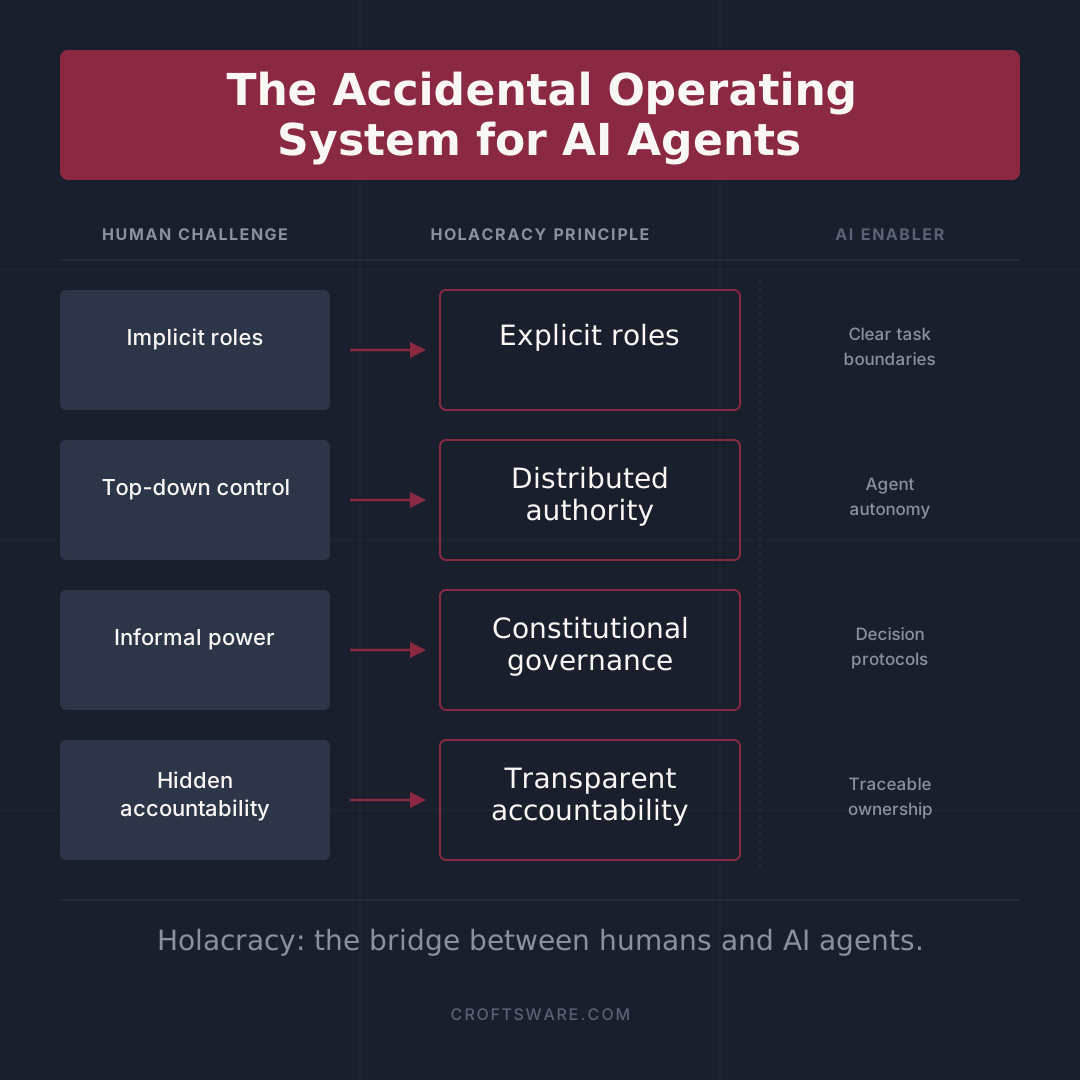
The insight is this: Holacracy was designed to make human coordination explicit — but in doing so, it created the kind of structure AI agents need to collaborate effectively. It's like designing an operating system for a computer that didn't exist yet.
The organisations succeeding with AI aren't the ones with the best AI strategy. They're the ones that already know how to operate with clarity, explicit processes, and distributed decision-making.
The future isn't about replacing humans with AI. It's about building systems where humans and agents work side by side, with clear roles, shared rules, and complementary strengths.
Holacracy might have been twenty years early. But it was preparing us for this moment.